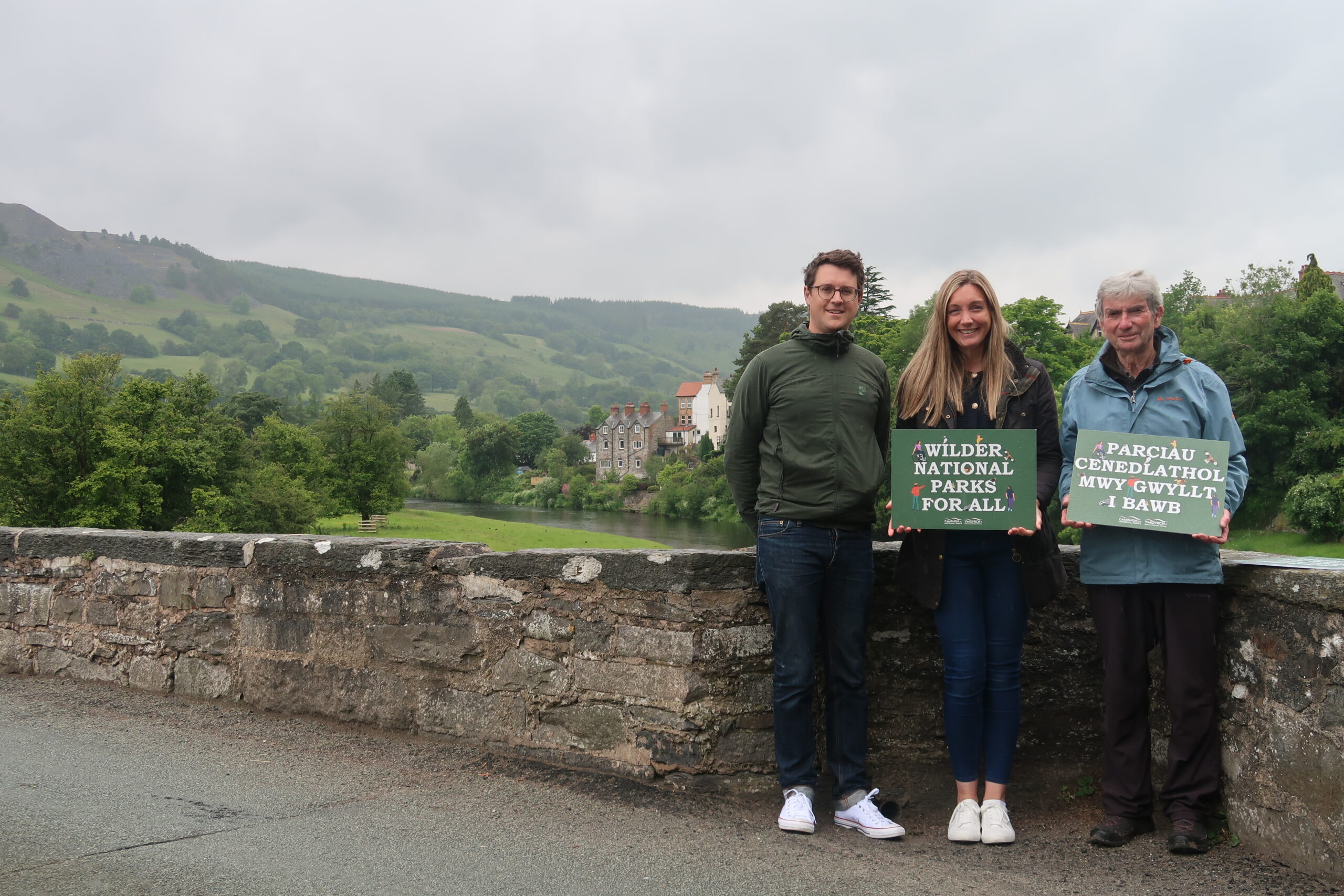
Guest Blog: Gareth Ludkin from Campaign for National Parks
It’s 67 years since a National Park was designated in Wales, 75 years since the right to do so was enshrined in law through the National Parks and Access to the Countryside Act, and 3 years since Welsh Government promised to designate a fourth National Park in North East Wales by 2026.
As proposals for a new boundary head toward public consultation this autumn, it’s obvious that the Wales of 1957 looks very different to 2024 in which one in six species are now threatened with extinction; 42% of Wales’ plant species are found in fewer places than 1970; and our soil and water resources are under increasing stress and strain.
We expect a huge amount more from our landscapes – for people, for climate and for nature – so to ensure that this new National Park is as transformational as we need it to be in the face of our climate and ecological emergencies, Wales Environment Link and eighteen other organisations have signed a joint statement which sets out a framework the new National Park needs to follow, in order to become an exemplar in the UK.
We rely on landscapes and the precious ecosystem services they provide for the food we eat, the air we breathe and the water we use. They are also places where people have lived and worked for many centuries, supporting livelihoods, rural economies, Welsh language, access rights and cultural heritage.
National Parks are also not just beautiful spaces; they make an essential contribution to our national natural assets and help us to meet environmental targets. Peat and woodland store carbon for example, helping the UK to meet carbon reduction targets, whilst moorland peat helps to clean our water and feed our river headlands.
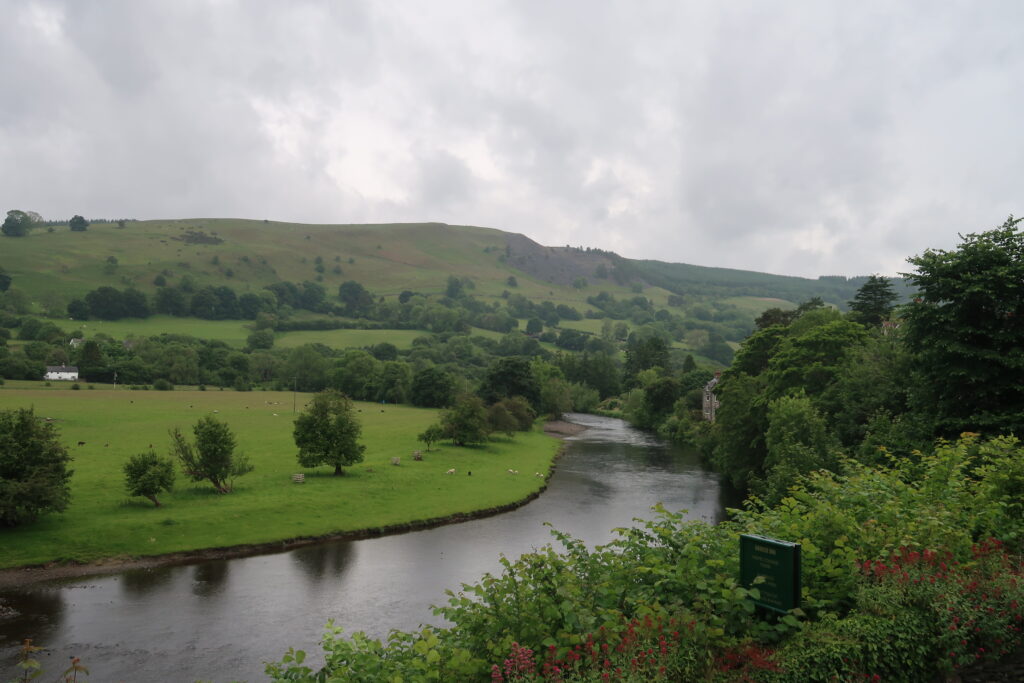
So, as the consultation reaches out for views across Wales, we should not ignore the power nature has to unite people, bringing benefits to all our lives. That’s why Campaign for National Park’s joint statement has a strong focus on nature and climate, calling for a National Park with ecologically coherent boundaries that consider the full network of interdependent ecosystem services and habitats present within the landscape. For example, avoiding dividing protected sites, nature reserves and wide expanses of important habitat (rivers, peatland for example) to ensure that a unified management approach can be achieved.
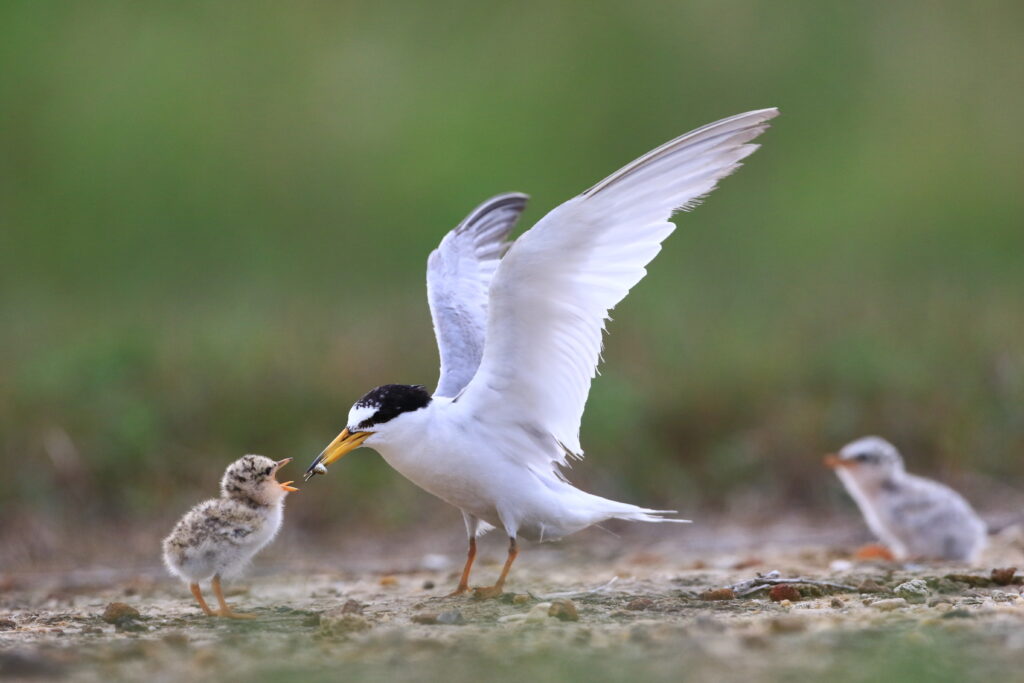
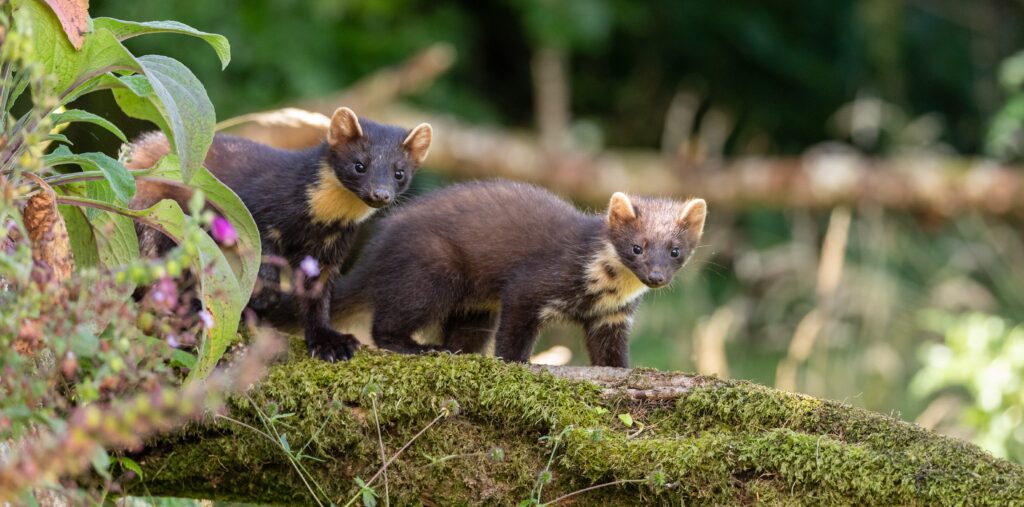
The area under consideration for National Park designation offers significant opportunities for biodiversity recovery; from the restoration of degraded peatland habitats on a huge scale across the Berwyn range and elsewhere, through to the targeted action needed to turn around the fortunes of Wales’ remaining Black Grouse population. It could also boost the existing and at-risk species in the area, including the little tern colony in the Gronant/Talacre dune system, pine martens around Lake Vyrnwy and breeding hen harriers in the Berwyn Mountains. Successive State of Nature reports have clearly demonstrated the need for scaled-up action, resource and coordination in the proposed area. We need to see an emphasis on species recovery with a programme to reverse declines with a focus on those most at risk. This should include work to develop community support for nature recovery by involving land managers and local people at every step.
Mynydd Mynyllod is one site within the proposed area which demonstrates an opportunity for this sort of collaborative action on nature recovery to thrive. Designated by Welsh Government as a curlew recovery area (critical for the species’ recovery in Wales), it is vitally important that further protection from damaging land management practices is established by the National Park designation.
National Park Authorities (NPAs) have an important role to play in driving this agenda forward and the Welsh Government’s current proposals to place an enhanced biodiversity duty on public bodies, including NPAs, to contribute to the delivery of statutory nature recovery targets will provide a further driver.
The prioritisation of conservation projects needs to be evidence-based and fully consulted on with as many partners as possible in the area. This can be achieved through robust Nature Recovery Action Plans for each of the National Parks which includes an inclusive consultation process which brings together joint resources and expertise.
To enable this we will need to see a full implementation of the Welsh Government’s Biodiversity Deep Dive recommendations for Designated Landscapes. This should include evidence and mapping tools to baseline nature recovery, and consideration in the next Senedd term of updated statutory purposes. Amended purposes should provide a clear remit to promote nature recovery.
A new National Park could and should be a springboard for greater collaboration in the nature conservation sector through formal partnerships and the furthering of Welsh Government’s Sustainable Management of Natural Resources principles which promote pooling resources, data sharing and taking an evidence-based approach.
The success of the new National Park in conserving and enhancing wildlife will be underpinned by how the Sustainable Farming Scheme (SFS) develops. Targeted agri-environment and land management support is an absolutely fundamental component of this new designation. If we don’t get the SFS right with incentives for land managers in National Parks to join the scheme, the new Park will struggle to achieve nature recovery results.
As Campaign for National Park’s Health Check report has shown, the role of private landowners in National Parks is central to success. There is an urgent need to ensure that payment rates reward the multiple benefits farmers and land managers in National Parks provide to safeguard nature and rural livelihoods. In England, Farming in Protected Landscapes (FiPL) was cited by NPAs as providing a good basis to engage with land managers. The £100m funding committed to FiPL, for distribution between 2021 and 2025, enabled NPAs to invest in nature outcomes via dedicated project officers, but the short-term nature of the funding hinders potential to deliver maximum returns.
Well-targeted and sufficiently scaled agri-environment incentives, tightly aligned with Management Plans, could make the most significant difference for nature recovery in National Parks. There is a clear need for long-term funding commitments to enable the kind of long-term planning necessary to properly protect and improve nature, so the delayed implementation of SFS should plan for this, using the experience of NPAs and maximising the opportunities within the collaborative and optional layers of the scheme. The scheme can be used to demonstrate new opportunities within National Parks to increase local skills in specialist habitat land management and traditional rural skills, such as walling and hedgerow laying, as well as ending damaging land management practices such as burning on peatland.
We now expect this public consultation to land some time in September or October. It follows the publication of an NRW report that showed 51% of respondents were supportive or somewhat positive about the proposed National Park whilst 42% stated they were against or felt somewhat negative toward the proposals. As we have seen from the protests and eventual delay of the Sustainable Farming Scheme, as well as the controversial 20mph law, well managed communications from Welsh Government and Natural Resources Wales (NRW) throughout this consultation will be absolutely key to the proposal’s success.
So far, the case being made by Welsh Government for a new National Park has been muted, and roughly two years since Natural Resources Wales (NRW) assumed responsibility for evaluating the case for designation, in-house technical assessments of natural beauty, special qualities and recreational opportunities in the area of search has left the public largely in the dark.
However, this is now an important moment to make the case for a National Park which puts nature recovery, sustainable land management practices and cultural heritage at its heart. These are not mutually exclusive ideas; they are intertwined and embedded in each other, and it’s clear that National Parks have the potential to set agendas, bring communities together over a common appreciation of our wildlife, our cultural heritage and our stunning natural landscapes. Let’s not waste that opportunity; let’s make National Parks a haven for bringing back thriving nature.